LessLoss Firewall Power Filter

LessLoss Firewall -- an invention by Louis Motek

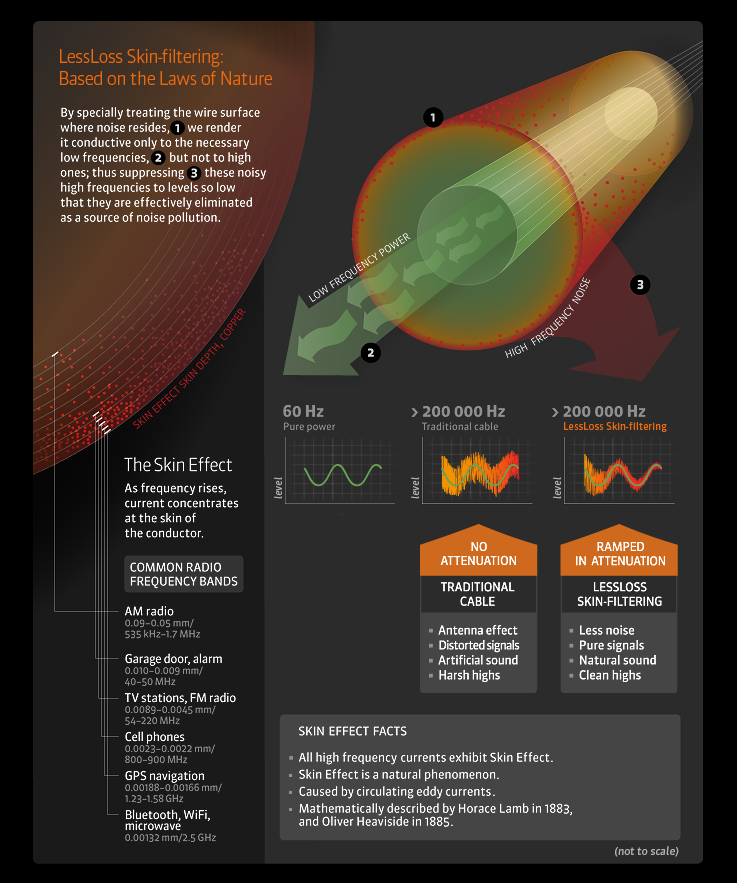
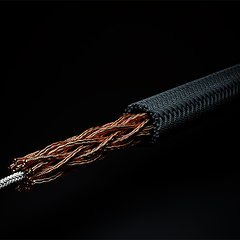
Curiosity about the highly effective LessLoss Dynamic Filtering Power Cable gave impetus to take the skin effect filtering method to its logical extreme. The result is the LessLoss Firewall.

In principle, the Firewall is based on the same skin effect filter technology that works so potently in the DFPC. Our goal was to increase the effectiveness of the DFPC 120 fold. Impossible? It seemed it would be easy.

In order to achieve this, all that was needed was to push the two main parameters of the already highly effective DFPC to the desired values, hopefully without encountering side-effects. We theorized: low frequencies - low resistance; high frequencies - high resistance.

Little did we know upon embarking on such a seemingly simple journey that we would encounter such roadblocks.

The best solutions prove their strength by exhibiting constancy and solidity under any and all conditions.

Therefore, the most effective test systems will assess these solutions at their ultimate extremes: they magnify the variables under assessment in isolation in order to avoid any and all unintentional influences which may alter the output data. It is, for example, unscientific to formulate theories about audio performance using only one test system, or one test location, or testing at the same hour of each day. Each of these variables, as well as countless others, must be isolated and explored. Finding every possible variant and testing against it is the goal of the LessLoss quality assessment system.

After meticulous computerizations, endless electromagnetic simulations and countless physical trial-and-error sessions, we discovered to our chagrin that those two simple parameters we'd identified were not the end of the story. In order to achieve the non-coloration we desired, as well as the massive through-put of dynamics we needed, what came to light was the decidedly non-scientific and extraordinarily frustrating observation that high frequencies have a somewhat delicate temper.

In anthropomorphic terms: they do not like to be told what to do. But that's ok, mad scientists will do anything to reach the end goal: we were faced with a decidedly touchy subject, so we decided to be exceedingly polite.

Manners work.

At very high frequencies, above those of radio transmission, metal functions not only as a conductor, but simultaneously, as a reflector, inductor, and broadcaster. At these same very high frequencies, signals do not remain solely at the surface of the metal. Instead they bounce off in very strange ways, forming nodes in extraordinarily odd places. In one test example, these nodes were found 2 cm away from all metal parts of the filter, simply standing right there in mid-air, and not necessarily stationary, but moving around seemingly haphazardly, forcing the filter designer to work catch-as-catch-can instead of simply applying his skin effect filtering technique and being done with it.


Such is life with high frequencies -- they can be like adolescents, always three steps ahead of you and always teaching YOU the lessons.

We wanted more filtering and more dynamics, without coloration of the sound. But the high frequencies wanted their freedom and remained quite clear about this. The buggers would simply not be contained.

Must respect them for adhering to their position.

However. We were determined to get the best of them. No snarky little high frequency was gonna mess up our sound quality. No sir.

What we needed was a way to confine and concentrate this erratic high frequency noise into a predictable location so we could eradicate it. The perfect solution would do this without impacting the natural flow of the energy which an audio system requires.

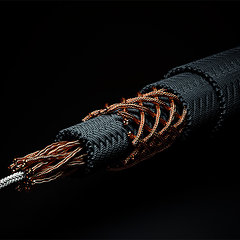
This perfect solution was already in place; exemplified by the DFPC. However, a cross-section of the DFPC has a total conductive area of 18 square millimeters, whereas the LessLoss Firewall would have some 1650 mm2 or more. And whereas the DFPCs cross-section has a 26 mm circumference of skin, the Firewall's early prototype designs had skin circumferences of 780 mm or more. That's nearly a meter, and represents an entirely new electromagnetic field situation within the filter.

The seemingly insurmountable problem was the physical dispersion of all this skin.

As stated earlier, signals at very high frequencies behave strangely. Our new skin was not only loss-y; at very high frequencies it was behaving simultaneously as a conductor, a reflector, an inducer, and a transmitting antenna, if not more. One of the first steps we took to reduce the unpredictability of the behavior of high frequencies in the Firewall was to work on the material for the case. This proved highly audible and was not overly difficult to solve.

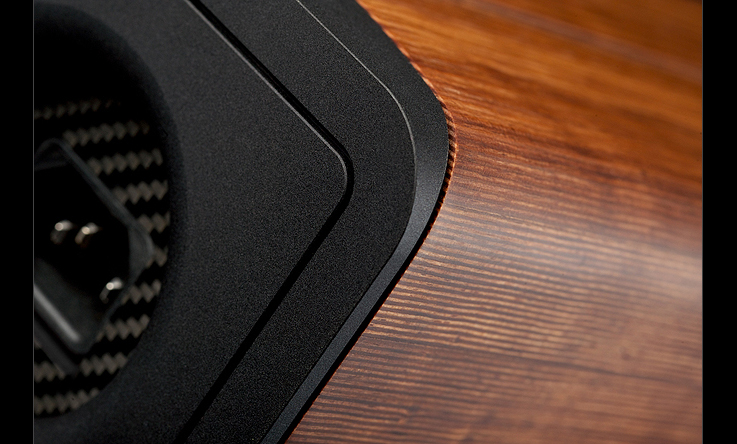
Wood was eventually selected: natural wood, due to the fact that all metal cases create a resonant chamber which will haphazardly redistribute the high frequencies within the enclosure, creating nodes that are arbitrary in both nature and location. These nodes not only intermodulate amongst other nodes, they also reflect off the metal case itself and are induced back into the filter. In a word: noise.

The use of a wood enclosure is remarkably advantageous to audio performance. Wood enclosures do not reflect; instead, wood tends to naturally absorb a spectrum of this noisiness which the ear easily appreciates. Contrary to common belief, it's not an acoustical resonance issue as much as it is a high frequency absorption spectrum issue.

When we speak of a "natural" sounding filter, we are in fact experiencing a lack of high-frequency noise reflecting haphazardly into and within the filter. (Incidentally, there's nothing altogether "natural" about 50 or 60 Hz. All audiophile problems and solutions are man-made. Let's not forget that.)

Having established a good-sounding solution for the enclosure, we were able to finally move on to more exciting and much more challanging territory.

With the Firewall having so much more skin, we encountered the problem of having that much more reflection and transmission (and therefore, re-inductance) of high frequencies. LessLoss's elegant solution? The geometry of our filter would ultimately provide it.

Our initial belief: the geometry of a coaxial design should easily yield a firm location of the high-frequency phenomena we wished to control. The coax design theoretically encapsulates all high frequencies between the center conductor and the shield. However, with such a solution, we ran into an unexpected barrier.

The interesting thing about a coaxial design for controlling the high frequency content of a signal is that the signal will balance itself if the wavelength is comparatively short. I repeat: if the cable is long enough, or, alternatively, if the wavelength is short enough, the signal actually becomes balanced after transmission. This means that the return path will swing just as the signal path does. Of course, for 50 Hz, the length of the coaxial cable would have to be extremely long - thousands of kilometers - for this to happen. But for very high frequencies (a.k.a. noise, where our work in this application is centered), only comparatively short lengths are required: for some, only a few cm of length.

However.

This leads to a new problem: the shield of even a coaxial design actually fluctuates with the high frequency signal.

What that means practically? We run into the same noisy high-frequency problem mentioned above - so much so that even the outer shield of the coax will begin to broadcast the signal. Talk about frustrated scientists: there is so much noise generated by the shield of the coax that it is comparable to what would have happened had there been no coaxial configuration to begin with. Utterly defeats the purpose. (Remember?) Right: it was supposed to concentrate all these volatile high frequencies in a controlled location so we could wipe them out.

Faced with this situation, more investigation was required. LessLoss needed to develop another, as yet unidentified configuration of signal and return conductors. The configuration we so ardently sought would result in maximum control of this galling high-frequency trait of broadcasting and reflecting, and would establish a predictable locality into which we could focus that high frequency noise on our way to eradicating it.

(Always easier to shoot a non-moving target.)

In other words - we had to build a trap.

The first step we had taken in our quest to liberate the perfect sound was to use the same filter technique that worked in the DFPC, simply by using more of the same skin-treated metal in the conductors. This had quickly yielded very promising results: simply by connecting two filters in series, we proved that the results could get better. Connecting two filters in parallel proved even better sounding, but this was actually worse news: the filter technology still had plenty of room for improvement. It wasn't until we'd reached some 120 times the effectiveness of the DFPC that further expansion in this direction proved inaudible. Some good news at last: one parameter's limit was reached.

But now, to get the configuration of the geometry to create an electromagnetic 'trap' so that the high frequency noise would be controlled and remain stable in a predictable location. Seriously tough, but it turned out, not at all impossible!

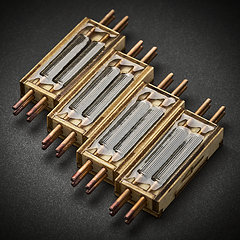
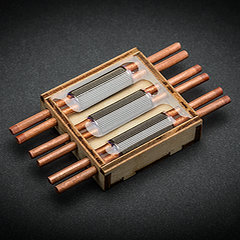
After endless iterations, we had firmly focused the noise: had made a successful internal arrangement which would send the high frequency noise in such constantly close proximity to the original loss-y skin of the conductors that a second skin akin to the original simply needed to be added after application of a thin dielectric material spacer, and, presto, the filter took care of a substantially greater amount of noise while not exhibiting any noticeable coloration effects in the audio!

The sound is quasi illuminated, comes forth with more ease, is impressively dynamic and somehow more authentic and alive than ever before.

There is a reason for this. Although the design is in principle similar to that of running 120 DFPC's in parallel, it is our precise configuration of said conductors and the application of the second layer of skin-configured conductors to them which results in the phenomenal perceived audio performance of the LessLoss Firewall.

That's not all. There's even more to this Firewall if you're still with me.

Take this “Illumination Effect.”

The supercharged sound image as achieved through the use of the LessLoss Firewall has everything to do with (are you ready for this?) the dispersion phenomenon in wave theory.

A prism's ability to form a rainbow out of white light is nothing more than a wavelength-dependent refractive index, meaning that different wavelengths in the white "noisy" light are bent at different angles.

When we set up the loss-y double-layer skin in the physical electrical configuration used in the Firewall, we were in effect creating a quasi-waveguide for high frequency bandwidths. Our waveguide behaved differently for different frequencies due to the loss differential inherent in the chromatic nature of the skin effect. In other words, nature, by means of the skin effect, had provided us with the prism -- it was up to us to change the loss index so that the naturally occurring effect would be more pronounced -- to the point where we were manipulating Group Velocity.

Group Velocity manipulation through carefully selected materials has been employed by physicists engaged in laser experimentation as long ago as the 1980's. Research using this method has led to the ability to significantly accelerate light, or to slow light down to nearly a standstill. Even Negative Group Velocity is possible, meaning that the signal packet propagates backwards in time. This gives you the wacky predicament that one has output before one gives input!

Of course, information still travels at the speed of light, and no physical particles have ever been observed to exceed the speed of light. We are referring only to wave-phase relationships. That said, the proper manipulative measures have definite practical applications that are of value to the communications industry.

Take fiber optics, for example. A fiber optic line creates a group velocity dispersion in the light frequency pulses that carry information. If this temporal group velocity dispersion is too large, a merging of the information-carrying pulse with adjacent pulses will occur, rendering errors in transmission. The most widely applied solution to this phenomenon is a mixing and matching of optical fibers with opposite sign dispersion characteristics, such that, in the end, the positive and negative dispersion qualities add up and cancel out. This is called dispersion compensation.

In laser optics, the solution is known as a chirped mirror. This is used to compensate for the dispersion characteristics of other optical elements down the line. In other words, because the distortion is linear, meaning predictable, it is possible to "pre-distort" the signal in a negative way with regards to the actual distortion that will eventually take place down the line. Then, when the actual distortion takes place, the signal is in effect placed back together the way it should have been from the beginning.

This, my friends, is the principle used to cancel noise in the high frequency bands in the LessLoss Firewall.

It sounds like a miracle, but it's just wave theory.

Materials with highly porous skin structures have extremely large surface areas. Just one gram of such material can have a surface area equal to half of a football field. So, a single DFPC may have an actual surface area the size of a large metropolis. Because they are traveling along the skin only, this is what the high frequencies see. The lower, desirable frequency, 50 or 60 Hz, sees the 6 feet from the wall to the gear and goes there directly, while the undesirable noise is getting lost in a vast cityscape. The low frequencies take the metro, the high frequencies have to walk.

In the Firewall, this is even more extreme. The filter inside the Firewall is only 50 cm long, but its conductive double skin, if completely unfolded, would be disproportionately gigantic. From the point of view of the high frequency noise? A whole other world in which to get lost forever.

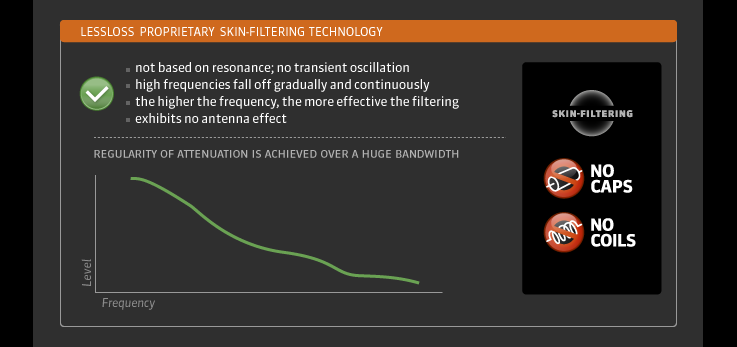
The amount of filtering effectiveness at the skin increases with frequency in a smooth fashion. Even the second skin of the Firewall filters in a "fade-in" type way, completely dependent on the frequency in question.

Therefore, with the Firewall, we have an extremely dispersed frequency response, with the 50 or 60 Hz fundamental at the very head of the pack. Just the way we want it for great sound quality.

And, since the dynamic demands of a sound system are source signal dependent, in real time we demand juice from the power supply in synch with the signal. We do not wait for 1/50 of a second before we politely ask our power supply for a bit of juice for this here rather impatient guitar player. He wants it NOW, because he's on a roll letting his emotions loose on that fine Goth guitar.

We have arrived at the leading edge of time. The Firewall is not saying "NO!" to the high frequency demands which give speedy instant power to the dynamics the gear needs; rather, the Firewall is saying to the guitarist's soulful demands: "YES, PLENTY for the TAKING, but ONLY from the 50 Hz army of loyal combatants, NOTHING from the unreliable skin, and nothing from that unpredictable space above the skin, either!" By the time the high frequency noise comes around, we'll all be packing it in and heading to an afterparty, talking about this amazing sound we've made.

Hence the effectiveness of the LessLoss Firewall filter. It works because it is a prism for dirty, diffracted electricity. It works because it is a dispersion corrector. It works because it is an anti-distortion device, or more accurately, a special PRE-distortion device. It works because it is a controlled waveguide without a confining resonator; it is a group velocity accelerator, a dynamic passive filter, a high end power conditioner, and a passive power distributor.

The LessLoss Firewall keeps the random noise of the capricious and volatile grid out of the best, purest, and most alive sound that you have ever heard. It will redefine the phrase "high end audio."

The LessLoss Firewall; your sentry for great sound.


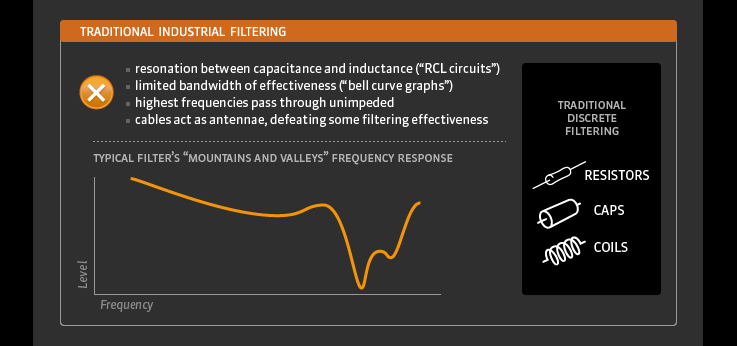
  • No capacitors or inductors
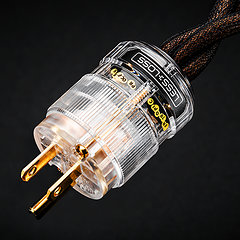
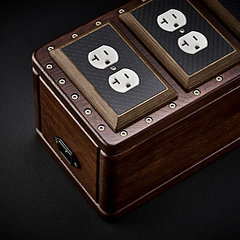
  • Eight Oyaide outlets with carbon / solid aluminum faceplates (USA type outlet version).
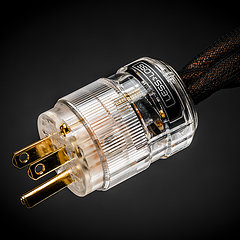
  • Furutech IEC input as far from the outputs as possible
  • No voltage control, fuses, or other signal throughput manipulation
  • No LED's, displays, or circuitry
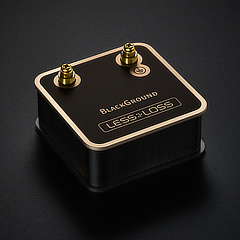
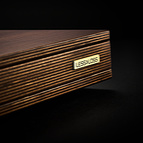
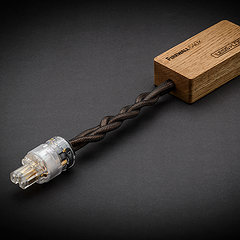
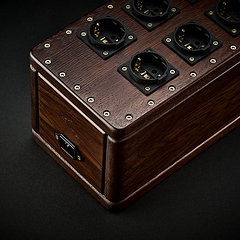
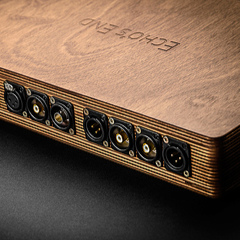
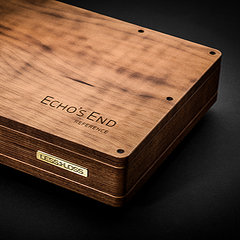
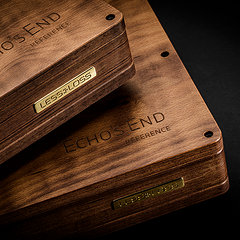
  • Solid Oakwood case. Laser engraved 'branding'.
  • As effective as 120 DFPC's.

We are nearing completion. For the latest up-to-date information about availability, please subscribe to our Newsletter.

Retail price is $4995.

The LessLoss Firewall was presented at the Rocky Mountain Audio Fest on October 10-12, 2008, at the Hyatt Regency Tech Center in Denver, Colorado.

www.audiofest.net

audiofest

Press coverage received:

Stereophile: "Ecstacy"
Stereo Times: "Best and Affordable!"
Dagogo: "Spectacular sounding"
EnjoyTheMusic: "Best sound of Show"
Positive-Feedback Online: "Several photographs"

Development of the LessLoss Firewall Power Filter

Much time and effort was deployed in investigating the nature of noise as a high frequency electromagnetic phenomenon. Interference occurs at all frequencies and there appears to be no limit at the top of the spectrum.

Noise borders on a gray area where one can no longer speak of inductance and radiation as two separate phenomena. The result of our investigation is the LessLoss Firewall: a power filter which takes the noisiness out of the mains line without in any way affecting the musicality of the audio equipment. For serious high-enders, there is nothing better in terms of performance and musicality.

Understanding the nature of noise


A Sneak Peek

Marty DeWulf / Bound For Sound
LessLoss Firewall AC Line Conditioner

Consider this coverage a preliminary report of sorts. That's because what I've been auditioning is not the final product expected to be "officially" released at the Rocky Mountain Audio Fest. Still, I expect the finalized product to be very much like the review piece that I have, but better.

For those of you that have already purchased LessLoss power cords, you know what this conditioner sounds like - It sounds like the power cords - but on steroids. Bring to mind every good thing that you like about the sound of the power cords, then multiply it by twenty, thirty, whatever. This conditioner imparts to your AC all the clarity, transparency and dynamic life that the cords impart, but more… much more. For years the biggest problem with AC line conditioners had to do with dynamic compression. The earliest designs over fifteen years ago could only accommodate low draw components, and often times added a darkness to the entire presentation that hung like an aura over the music. As a rule, power amps could not be used with them.

Liudas from LessLoss invited me to plug the entire Big Rig into a single four outlet Firewall - power amps and all. He said that it could take anything I could throw at it in terms of wall draw and come away unfazed. At first I was skeptical, the APC and Monarchy were amp capable - but an entire system? The only thing he requested was that I use his power cords on the input and output side of the conditioner. The APC S15 restricted power flow as little as anything used prior to the Firewall. The Firewall seems to restrict power flow from the wall even less. I couldn't measure it, but I could hear it. The Firewall doesn't have a built in battery pack in case of power line failures, it doesn't isolate each individual outlet from contamination coming from the other outlets, nor does it have a circuit breaker system to protect components from power line surges or lightening strikes. But in terms of sonics, it's in a class of its own.

So, does it justify the price? Not in terms of conveniences or protections, but in terms of pure sonics it makes sense if you've got the system. And unlike every other line conditioner on the market, the theory and concepts behind this design are new and in many respects revolutionary… there is nothing like it. The Firewall is not a gussied up remake of anything that has preceded it. It is new, truly new and based upon a different concept of power line filtering. It looks at everything from a different angle. Liudas hasn't restructured the laws of physics, he's just using them in a different way.

The Firewall imparts a wholeness to the music through a window of pure transparency. And while an AC line filter is not in the strictest sense in the signal path, it helps every other component in a system to perform optimally. With the Firewall, every component resolves a little more information, is a little quieter, is a little more dynamic, presents a purer tone and scales depth and dimension a little more realistically. With a system of low aspirations, the improvements will not be awe inspiring. But with a system that has been pushed and tweaked to its mechanical limits, the Firewall that I have right now will push he envelope even further. Further into the next realm of musical performance.


Your IP Address is: 38.103.63.57