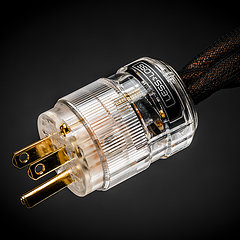
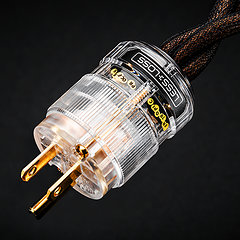
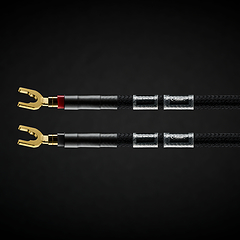
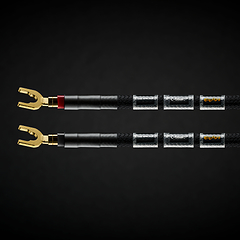
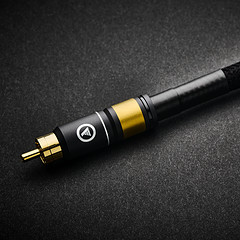
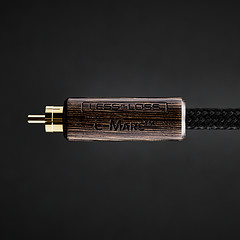
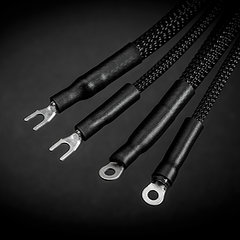
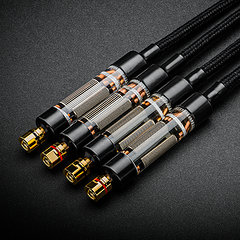
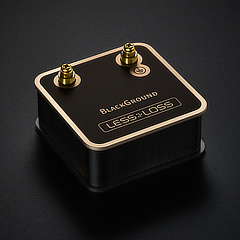
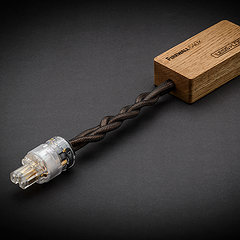
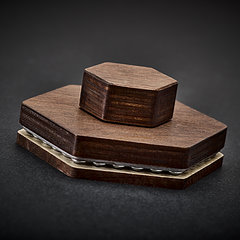
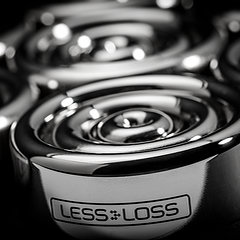
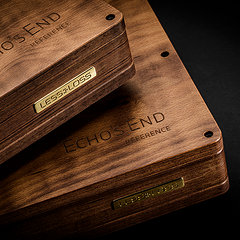
Featuring augmented LessLoss Skin-filtering technology, and a high performance panzerholz acoustical damping structure, the Firewall blocks noise pollution to levels traditional capacitor and coil-based solutions can only hope to approach. Developed from our critically acclaimed DFPC (Dynamic Filtering Power Cable), the LessLoss Firewall reveals hidden subtleties of the entire audio event as it eliminates the widespread negative effects of high frequency noise pollution.

Save ink and paper –
print from here!
Just as the DFPC Signature is a highly effective upgrade to the DFPC Original, the Firewall is the upgrade for use with the DFPC Signature. Where the Signature leaves off, the Firewall takes over. As such, DFPC Original users are urged to upgrade to DFPC Signature power cords to obtain full performance from the Firewall. Email Louis Motek at
[email protected] for details on our attractive power cord upgrade program.
If using power distribution units: we recommend using units containing no internal fuses or filtering elements (e.g., capacitors, chokes or transformers). Customers report excellent results with Furutech models e-TP609 and e-TP60.
The Firewall is an excellent component isolator. The filtering provided to the power of a system can equally well be used to provide isolation of noise from one piece of equipment to another. Typically, digital source gear tends to be the most noisy to the rest of the gear in the system sharing the same power line. To separate these, two Firewalls are recommended, and they will both filter in both power flow directions, bringing the system’s performance to a new level.
In application, the Firewall was conceived as a modular system: we’ve designed it to be used in a variety of ways in a variety of systems, adjoined by whatever lengths of DFPC Signatures you choose. This way it provides maximum usability and ease of incorporation into any system’s space and separation requirements.
Just as the DFPC Signature is a highly effective upgrade to the DFPC Original, the Firewall is the upgrade for use with the DFPC Signature. Where the Signature leaves off, the Firewall takes over. As such, DFPC Original users are urged to upgrade to DFPC Signature power cords to obtain full performance from the Firewall. Email Louis Motek at
[email protected] for details on our attractive power cord upgrade program.
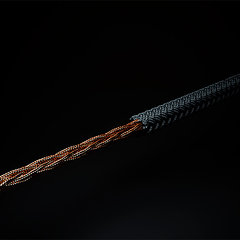
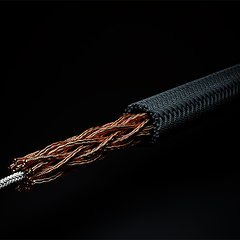
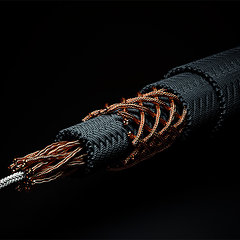
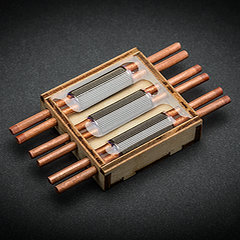
At the heart of its functionality, the Firewall features our tried and tested Skin-filtering technology upon which our power cables are based. Skin-filtering makes perfect use of the way that alternating electrical current naturally travels down a wire. Its functionality is based on the principle of attenuation over distance, and on the high-frequency skin effect first described mathematically in 1883. Users
the world over attest to the supremacy of this technology while comparing to traditional power-filtration methods based on capacitors and inductors.
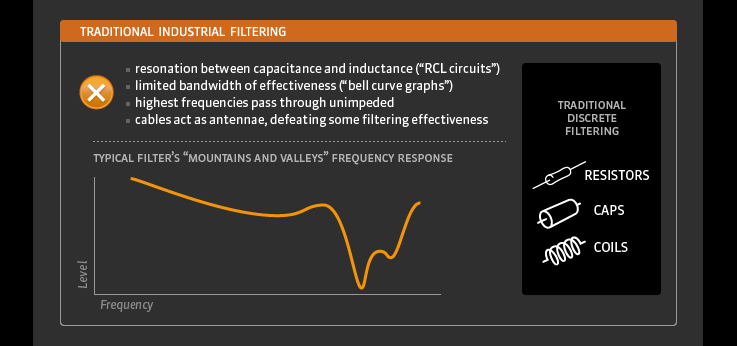
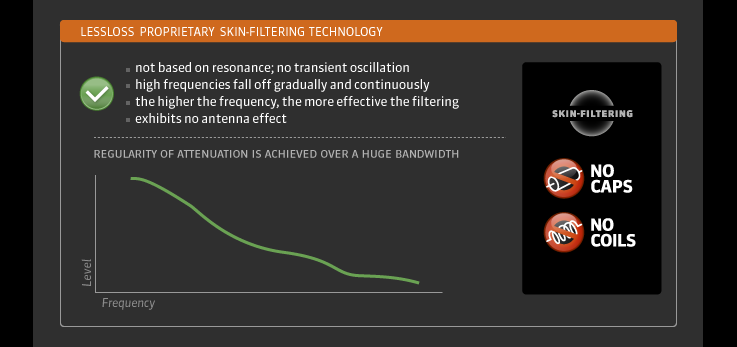
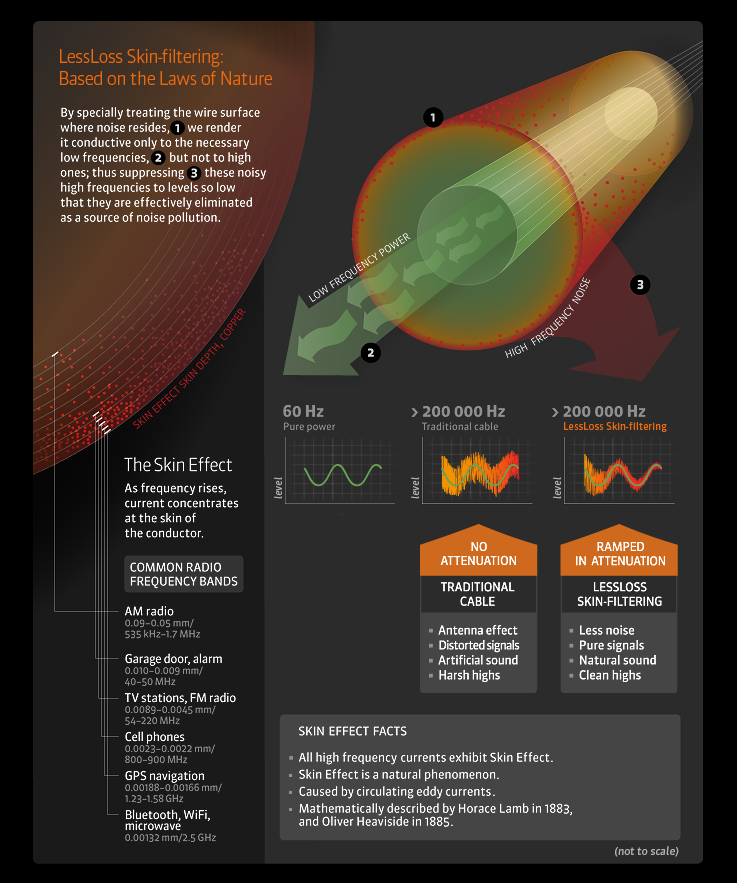
Because nature determines that high frequencies reside at the skin of every conductor, it is easy to understand why LessLoss Skin-filtering is the audiophile’s best and most efficient tool to condition the power before it enters his or her audio component. Treating the skin of the conductor attenuates HF noise, preventing it from entering your gear. Because this filtering solution is employed only at the skin of the conductor, the solution never restricts the low frequency power flow your gear relies on. This way you get enhanced HF attenuation without compromising dynamics or coloring the sound.

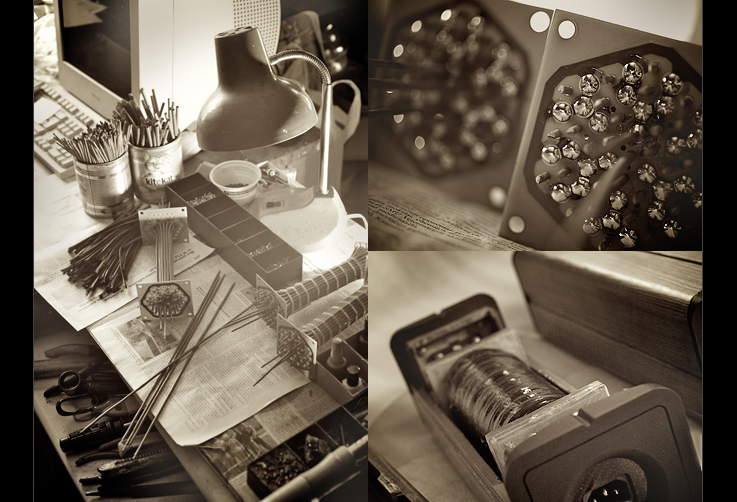
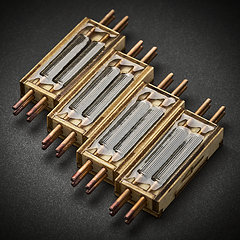
Each handmade filter module requires five days of labor to complete. Electrically, the Firewall is equivalent to some 100 of our DFPCs wired in parallel; we apply our Skin-filtering technology throughout the entire filter. We also use our own virgin copper, meaning that the treatment process begins in house with red hot copper. The metal is never bent from its virgin state through to the finished product. Conditioning of the metal to yield directionality is done by extensive in-house processing. This process continues long after the customer installs and uses the Firewall locally through a widely experienced but little understood process known as burn in.
We’ve also taken great care to protect the Firewall’s internal power carrying busses from mutual vibration. This is because microvibration creates significant audible adverse effects, even when introduced as far from the signal-carrying components as the external power conditioner. A simple experiment shows how readily audible this is.
Before we chose a casing material for the Firewall, we arranged listening tests using two DFPC Signatures connecting an unenclosed Firewall from the wall outlet to a variety of audio components. Some of these listening tests involved a person standing directly on top of the Firewall module. To our surprise, this caused instant audible improvements. This was easily confirmed over numerous listening tests using speakers, headphones, and several pieces of audio equipment. The only logical conclusion is that the added weight served to reduce microvibration occurring in the Firewall. As you’ll see, these findings have direct bearing on the Firewall’s final enclosure design.

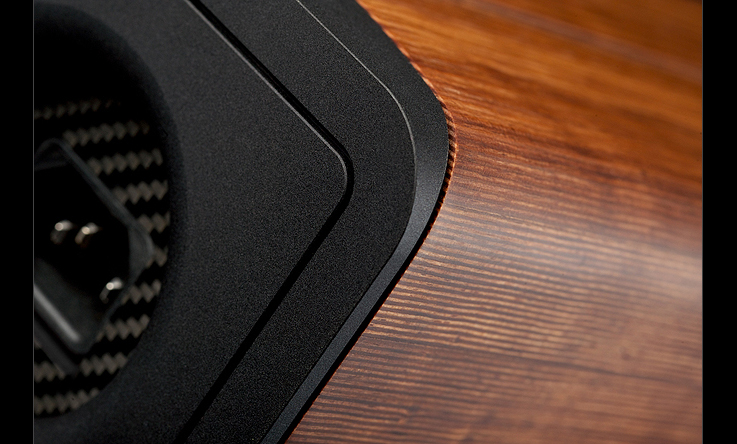
Panzerholz: high-tech acoustical damping
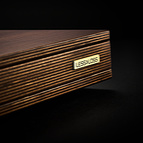
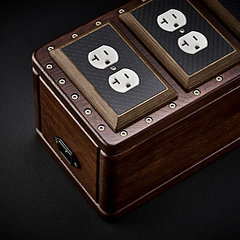
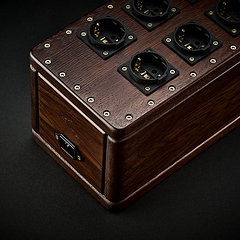
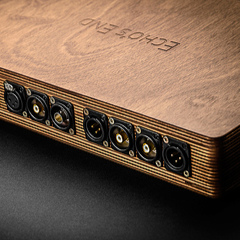
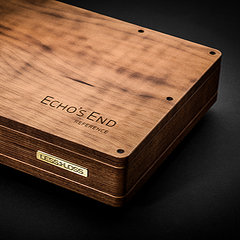
The Firewall’s panzerholz is much more than an aesthetically spellbinding enclosure; it was chosen primarily for its phenomenal acoustical damping properties.
Panzerholz is made of layers of beechwood, fused together under extreme amounts of heat and pressure (250 tons per square inch). This causes the original cellulose wood compounds to form new chemical bonds amongst neighboring layers. Thus, a new type of wood is born: panzerholz. It finds application in different high-tech fields. For one, Formula 1 race cars use Panzerholz for its excellent vibration damping properties (instead of aluminum or steel, which exhibit ringing). Also, some of the world’s top turntables and highest performance loudspeakers use panzerholz, and it also finds application in the high-tech field of neutron research with highly sensitive equipment. As we pointed out above, even in a power filter, microvibrations are undesirable. Since panzerholz exhibits among the very best vibration damping characteristics, it makes an excellent casing material for the Firewall.
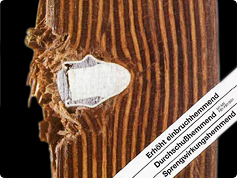
Panzerholz (German for tankwood) is a high-tech natural wood product manufactured in Germany. It is known for its extremely high density (it sinks in water; approximately 87 lbs per cubit foot.), its high strength (similar to the strength of aluminum), and that only a relatively thin layer of it is required to stop a bullet in its tracks. This unique elasto-mechanical performance is related to its acoustical damping characteristics, which are among the very best of any material in existence. (See test on next page). These characteristics make it the best choice available for a high performance product such as the Firewall.
Carbon fiber
Although carbon fiber has been permeating the design world largely due to its aesthetic merit alone, it also features excellent acoustic damping properties. Many consider acoustics only in the popular sense of airborne vibration, but air is only one medium that acoustic energy can travel through. Acoustic energy can travel through any material, and we’ve found, after extensive testing, that a combination of tankwood and carbon fiber yields superlative results. Carbon fiber also has excellent EM shielding properties at very high frequencies, which further lowers the total noise floor.
Oyaide inlet & Furutech outlets
When choosing outlets, we chose gold-plated contacts by drawing on expertise gained from years of our extensive power cord investigations. There we learned that gold-plated contacts are superior to rhodium or palladium plated ones. The combination of the glass-infused Oyaide IEC input and gold-plated Furutech outlet results in a tonal balance and integrity without causing listener fatigue, even over extended listening periods.
Anodized aluminum
To finish off the tankwood frame, we carefully chose a conservative amount of aluminum to create robust end caps for the Firewall’s enclosure. They were then sand blasted and anodized black for aesthetic beauty and protection.
Because of the care which goes into each hand-made module, the user receives a device which is much more than a typical filter. The Firewall is a unique no-capacitor, no-inductor solution for noise-laden mains. The solution’s efficient nature reveals itself in an audible manner akin to the DFPC Signature, albeit in a vastly enhanced way: immediately, as an obviously lowered noise floor, and then, over time, in an ever-growing and blooming naturalness of sound quality. A cleaner, clearer picture emerges as the music’s inherent dynamics flow freely, unrestrained by otherwise ubiquitous power source deficiencies.