








What is a power conditioner?
A power conditioner is a device that sits between the wall socket and your system, and its job is to keep electrical noise out of your components.
Now, which noise? Most people picture hum, or the 50 and 60 Hz harmonics thrown off by motors, pumps and refrigerators. Those are real enough. They are also largely harmless to music, because your components' own power supplies were designed from the start to deal with them. Stable, though, is not the same as sublime.
The noise that does the damage lives much higher up: radio frequencies, from kilohertz well into the gigahertz range, riding along the very wires that bring you power.
Where does mains noise come from?
Mains noise is picked up by your power lines, which work as antennas whether you want them to or not.
The world is saturated with high-frequency signals. Vacant frequencies no longer exist, and the tendency is to pack more data into ever narrower bands. The grid's own wires are used as communication lines while they boil your morning tea. Above your head, cell towers and satellites stream audio, video and everything else through the air. There is no quiet corner left for us.
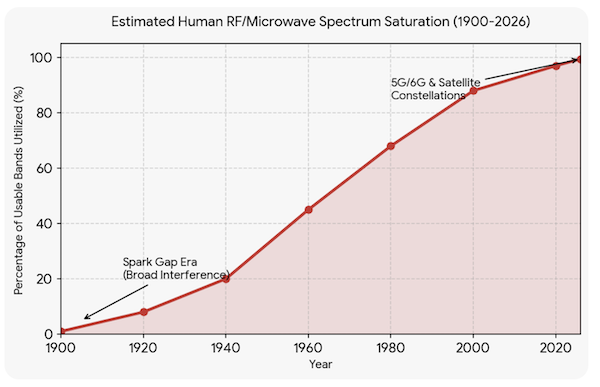
Capacitive and inductive coupling, the same mechanism by which any antenna receives a signal, lets all of this into your system two ways: along the power line and in through your power cord, or directly into the cord itself.
Once inside, it does not sit still. It interacts with every circuit it meets, in combinations nobody designed and nobody can predict. The term is intermodulation distortion, and the effect is that information is both added to and taken away from your audio signal.
By the time what remains reaches the speaker coils, you hear it as a haze. The soundstage loses its depth. Instruments stop being separate things. The noise floor rises and the treble turns hard.
Is a power conditioner the same as a surge protector?
No. And the difference matters a great deal more than the shelf they share.
A surge protector waits. Inside it sit components that stay inert until the voltage crosses a threshold, and when it finally does, they dump the excess to ground and go quiet again. That is the theory, and on paper it means a surge protector does nothing at all to your sound on an ordinary evening.
In practice we have never found that to be true. A surge protector placed within a sound system is always audible. The right place for one is your home's circuit breaker housing, where it can do its job without standing in the path of your music.
Each surge it absorbs also wears it down a little, and one day it will fail, usually without telling you.
A power conditioner works the other way round. It is busy every second your system is switched on, because the noise it deals with is there every second. It is not waiting for the once-in-a-decade lightning strike.
You may well want both. Just don't ask one to do the other's work, and don't put the surge protector where it can be heard.
Power lines run for hundreds of miles. How can the last two meters matter?
The last two meters matter precisely because they are the last.
It is a fair objection and we hear it often. If high-frequency noise accumulates across hundreds of miles of grid, what can one power cord possibly do about it?
The answer lies in how electricity behaves inside a wire. The higher the frequency, the faster it attenuates along the length of that wire. This is why high-frequency communication lines need re-amplifiers at set intervals, and why the higher the frequency, the more of them are required. Manufacturers of HF cable are obliged to publish attenuation-over-length figures for exactly this reason: keeping high frequencies intact over distance is genuinely difficult.
Now turn that around. Noise induced far away arrives at your system already heavily attenuated. Noise induced close by does not. The stretch of wire nearest your equipment is therefore the stretch that introduces the most noise at the highest intensity.
That stretch is your power cord.
So why don't we simply build a conventional power conditioner?
Because the conventional recipe asks you to pay for the cleaning with something you will miss.
Put a transformer, a bank of capacitors and/or a choke in the path of your mains supply, and you will certainly remove noise. You will also place all of that between your amplifier and the current it calls for on a loud transient. The system does go quiet. It also goes small. Most listeners hear this as dynamics flattening out, and they are not imagining it.
This is why, when customers ask us about power distribution units, we recommend ones with no internal fuses and no traditional filtering elements based on resonance inside them.
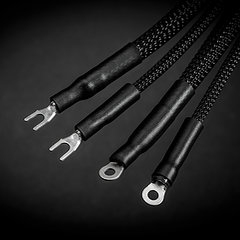
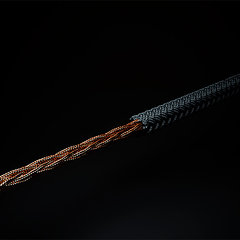
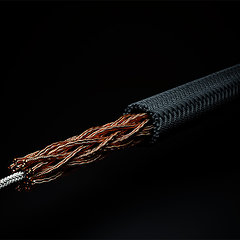
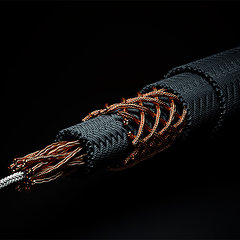
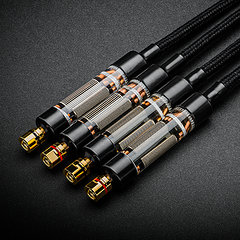
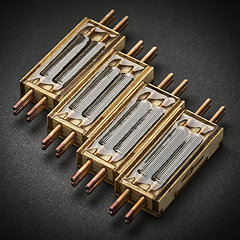
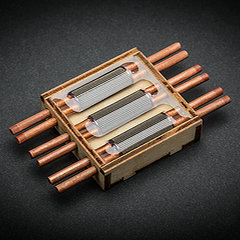
Our approach removes the trade altogether. Rather than filtering the current after the fact, the conductor itself is built so that high-frequency noise cannot travel along it, while the current your music needs passes unrestricted. Nothing sits in the path, waiting to be asked for power.
Why don't we publish attenuation figures?
Because on a power line those figures would not mean anything, and we would rather say so than print an imagined chart.
A power line has no characteristic impedance. When you measure a signal whose wavelength is shorter than the path being measured, you meet nodes and peaks that shift depending on where the probe sits. A reading taken at one point gives an entirely different result at another. Published, it would perhaps look authoritative, but would tell you nothing.
It would also be absurd to conclude that high-frequency noise does not affect audio simply because it resists convenient impedance matched measurement.
Which component should you treat first?
Treat your source first. Then amplifiers, then the preamplifier, then distribution, and the phono motor last.
The reasoning is that a signal can only degrade as it travels. The most crucial function of any system is forming the signal correctly in the first place, and that happens at the source: the digital source devices, the DAC, the CD player, and the phono stage. If the original signal is compromised there by impure power, nothing downstream will recover it. No tweak, no component swap, no filtering further along.
Amplifiers come second because their function is invasive. An amplifier takes power from the mains and uses it to raise the level of your signal, which means the quality of that power has direct influence over the quality of what comes out.
Preamplifiers come third, distribution fourth, phono motor fifth.
The LessLoss range
Three products address power conditioning, each in a different place in the system.
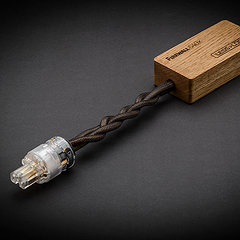
Firewall 640x

A plug-and-play current conditioning unit. It treats the power reaching one component, and is equally effectively used to isolate a noisy digital source from the rest of the system.
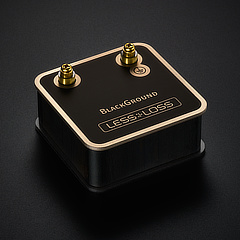
BlackGround 6x/10x Power Base

A plug-and-play ground interface for power lines, addressing noise on the ground connection rather than the live one.
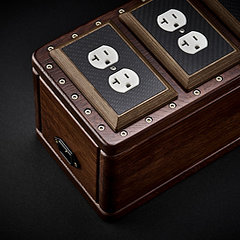
Power Distributor

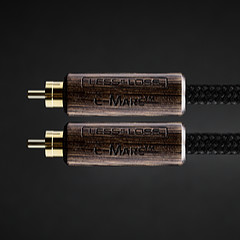
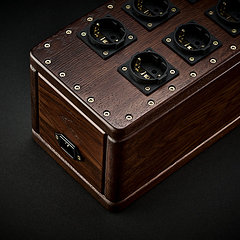
Includes Entropic Process C-MARC internal wiring and Firewall technology throughout, for systems where everything runs from one point.
If you are not sure where to begin, the order above is the honest answer: start at the source.