






User Reviews
Published LessLoss Reviews Now Number Over 727
DFPC Original (legacy)DFPC Signature (legacy)DFPC Reference (legacy)DFPC Series (legacy) (all)Digital Cable (legacy)Firewall (legacy)Anchorwave (legacy)Homage to Time (legacy)Tunnelbridge (legacy)Laminar Streamer (legacy)Bindbreaker (legacy)
All
DFPC Series [Signature]
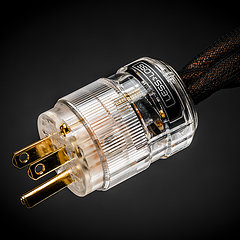
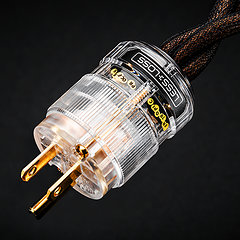
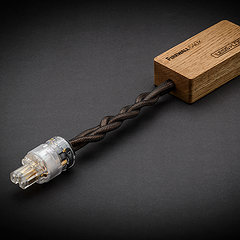
So what led me to "take the plunge" was that the DFPC power cord is not just a power cord, it is a noise filter as well. Without considering this dual function I would never have spent that much on "just a power cord."
I got 2 DFPC Signatures: one on the source and one on the amp. The whole system requires only these two power cords. I upgraded to the Signatures from the stock power cords provided by the manufacturers. I’ve been using the DFPC Sigs for 3 months now.
System (total ca. $7000)
Speakers: Focal 816V ($2,100)
Speaker Cables: LessLoss Anchorwave (3m @ $2,000)
AVR: Yamaha RX-A 3010 ($2,000) -- used in 2 channel Pure Direct mode
Interconnects: Kimber PBJ ($150)
Source: Cambridge Audio 650C ($800)
Room: 16’x18‘x7.5’, untreated, laminate flooring, gyprock walls, open back wall
---------------------------------------------
Set-up:
The cords grip the outlet/inlet very well, and are light and very flexible. In my system, the Signatures are visible, and so their flexibility was key not just to setup, but to aesthetic presentation, too.
------------------------
Pre-Evaluation & critical listening method:
First, I keep my CD player running 24/7. I also warm up my amp for 20-30 minutes before listening. For critical listening, I used only a handful of music I was very familiar with. I would listen to 1 full track before switching power cords (or a few minutes of it at least) under an ABAB test scenario. During play, I would jot down short notes of things that stood out to me. Before switching cables, I’d pause after the track played to reflect on the track and possibly jot more things down. Then I’d switch out the power cords for the Signatures and repeat the same chunk of listening and note-taking.
------------------------
Evaluation:
Within a few seconds, audible improvements were completely obvious. The effect was an emotional response that caused me some laughter, eye-widening, and jaw-lowering. Keeping my emotions in tact, I listened further. Rather than take you through each track and the ABAB notes, let me just list some of the noted improvements (in no particular order).
- Clearer, crisper
- Higher fine detail resolution
- Vocals more real
- Fuller sound
- Deeper bass
- Bass more articulate
- Starting to hear the recorded room now
- Instantly real
- Lower noise floor: sounds like instruments used to sound through a veil.
- Smoother vocal
The improvement that the Signatures made which I value the most has been the element of realism. Never mind that my system’s low end is now more articulate (although I certainly love this), or that the music now sounds more 3-dimensional, or any of the other improvements these power cords offer; when I listen to music now, the illusion that Jeff Buckley is singing in front of me, or that Keith Jarrett is playing a harpsichord in my living room, is more real than ever. To achieve this level of realism with a system costing what mine does is remarkable. Sometimes vocals are so real sounding it’s eerie.
------------------------
Putting the performance enhancement in perspective:
I’ve auditioned Simaudio’s 300D DAC ($1,800) and their $4,000 integrated amp (the 340i). The 300D is a good DAC for the money, but the performance enhancements offered by LessLoss DFPC Signatures are without question more in number and far more obvious. Now, I loved the $4000 Simaudio integrated amp; it was easily a substantial improvement over my home-theater amp—returning it made me sad. But, if I had to choose between the new amp and two DFPC Signatures (say price wasn’t an issue), I wouldn’t think twice: the Signatures for sure! Using the Signatures to lower the noise that enters my components not only produces more sonic improvements, but has a greater positive impact with respect to clarity and realism. Now, say we bring price back in the picture, the DFPC Signatures are virtually half the money of a serious amp upgrade (from Yamaha’s $2G flagship home-theater amp to the finely reviewed $4G Simaudio Moon 330i).
------------------------
Dealing with LessLoss:
It’s obvious that Louis Motek prides himself on great customer service. When I emailed LessLoss, I got a reply directly from the boss. As such, I’ve had the pleasure of exchanging several emails with Louis and his responses have always been thoughtful and timely. His business, though on the net, really doesn't feel like it's far away. Shortly after ordering I had the well-packaged cords in hand.
This has been a sublime customer experience: products that deliver obvious and substantial performance enhancement, fast shipping, well-packaged products, and top-notch customer service.
Thank you!
DFPC Series [Signature]
The DFPC Signatures carry my highest recommendation, for any serious music lover.
Miro Krajnc
http://www.soulsonicspeakers.com/
DFPC Series [Signature]
I put the two PC to burn in for a week connected to the monoblocks. Then I made a careful listening, and I was amazed by the level of quality of this cable. Transparency, timbre, bass quality, neutrality, large frontstage, extended notes.
They were indicated for me for using on amplifiers, but I am really curious to test those cables on my Pre and my source, without taking the amps PC out. And I will soon test the Anchorwave IC and speaker cable, I believe the combination will be what I am looking for.
Anchorwave Speaker Cables
First to go were my top-of-the-line Shunyata power snakes, replaced by LessLoss Signature cables. (Actually, they were first replaced--and bettered--by the Original DFPC, and those cables impressed me so much I immediately upgraded to the Signatures--a dramatic further step forward.) Then I replaced my interconnects with Anchorwave interconnects, and then finally I replaced my speaker cables with the Anchorwaves. At each stage, the improvement was startling. Music was more natural and less electronic; countless new details emerged from very familiar recordings and my preferred test tracks; imaging and soundstage were much more tangible and lifelike. And after each round of replacements I was convinced that I'd reached a level of realism from which any further improvements could only be very subtle. But then when I replaced the next set of cables, the improvements were not subtle at all. So now that I'm fully cabled LessLossily, I suppose next I'll have to upgrade to Blackbodies or some other weapon in the company's arsenal. I believe I've learned not to underestimate the benefits of introducing more LessLoss products into my system.
One more thing: As I introduced more and more LessLoss cables to my system, I also noticed that occasional but persistent moments of irritating edginess on certain otherwise good recordings began to disappear. I'm quite sure this was not because the LessLoss cables colored everything lovely. Crappy, irritating recordings still sounded crappy (sometimes in even greater detail). Evidently, what had changed was that I was no longer hearing some of the relatively minor flaws in the otherwise first-rate cables I had been using. To me, this was further confirmation that the LessLoss cables do indeed distort less--and conspicuously so.
I should add that I'm a musician, an acoustic musician, and I know what instruments sound like. As far as I'm concerned, the LessLoss cables are one of the great bargains in audio.
Anchorwave Speaker Cables
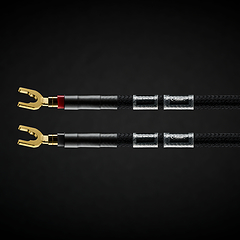
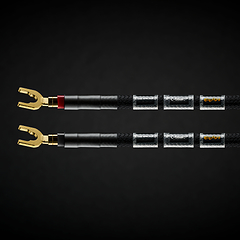
Since owning the Anchorwave speaker cables, I've had chance to compare them against two very different cables: expensive Siltech cables, and relatively inexpensive Kimber 4TC. I'll discuss the Siltech comparison at length since it's more interesting.
The Siltech (model 770L) costs more than $4,000 more than the Anchorwave. The system belonged to a local hi-fi shop. It consisted of:
Moon 700i amp ($12,000)
Moon 750 DAC ($12,000)
Siltech 770i ($3,000)
Siltech 770L ($6,200)
Focal Electra 1028 Be ($9,000)
LessLoss DFPC Signatures / Firewall (provided by me)
What differences would I hear (if any)? Would they even be significant? Would I walk away disappointed with my Anchorwaves? I really didn't know what to expect. My dealer was quite clear (a very experienced fellow, but never heard of LessLoss) he said he'd tried high-end cables from Nordost and Cardas, (among other loudspeaker cables brands), but that for years, nothing has been able to compare to the Siltech. So, before I even finished unpacking the Anchorwaves, he laughed and told me that I was about to be seriously disappointed. I came in not knowing what to expect, but it seemed he already had it figured out before we even hit play.
This isn't about to be one of those glorious conversion stories. No, in fact my dealer is still determined to think the Anchowaves are an overpriced hi-performance cable. He said he'd prefer Kimber 4TC at $200 for 2m. Of course, I think that's bloody insane. Let me explain why.
We began listening to with the Siltech cables in place. This was yet without any LessLoss power cables or Firewall (just some low cost Shunyata power cables). When we switched to the Anchorwaves, as soon as I hit the stop button, he chimed in, "Yup! Just what I thought: poorly balanced; too much bass and too much treble…" Now, I was actually disappointed at this point, too. The differences between the cables were like night and day—nothing subtle about it. I heard some nasty highs that were painfully obvious, and the bass levels had increased as well. (Keep in mind, this is with the Siltech interconnect, not the LessLoss Anchorwave interconnects). I heard lots of "I told you so" at this point. But this is where it gets interesting.
I then used two LessLoss DFPC Signatures, with a LessLoss Firewall between them, to power the Moon 750 CD player. Then I used the remaining DFPC Signature to power the amp. With this setup, we then sat back to listen. Immediately there was a radical improvement: all that nasty treble was gone! I was blown away. The cable's balance was much more settled. This time, as soon as I hit stop, I said, "Wow! All that rubbish in the treble range is now gone." After a few moments of silence, he then remarked how there was much too much bass. I proceeded to ask genuinely just how one can determine whether that's just the way it was meant to be: perhaps that's what the recording just sounds like. He suggested that after more than two decades of listening, you just know. I really didn't think the bass levels were out of balance, or overbearing, at this point. Nevertheless, there was still another surprise to be had.
We switched back to the $6,000 Siltech cables. This time we had LessLoss power cords and Firewall at work, just like with the Anchorwaves. A few seconds after hitting play, I just grinned (to myself). I had just received something of a lecture from this guy as to why all that bass shouldn't be there, and how the Siltech cables just do it right; yet, here we were and the bass levels sounded virtually identical to those of the Anchorwaves. Oddly enough, he didn't say a word about it. Neither did I: I was there to hear cables, not for any "I told you so" purposes. What I also noticed was that, in contrast to the Anchorwaves, the Siltechs sounded very much coloured in the mids and highs. One might describe it as very smooth, or silky. Whatever it was, while it may have been "smooth" or "silky," it now sounded like a coloration rather than something natural. That's definitely not what I'm looking for in a cable. I want something as close to colourless as possible, and there's no doubt in my mind that the Anchorwaves were doing a better job at it than the Siltechs.
What I was able to draw from this experience is firstly, the importance of power filtering. Without the LessLoss cables, I would never have heard the potential of the Anchorwaves. If I was a Siltech owner, I might've attributed the cable's coloration's to another component and erroneously replaced it instead. I have no doubt that, additionally, listening with the system over time, many more notable things would become apparent (just like they have in my own system). Even the dealer was quick to acknowledge the virtues of the LessLoss power filtering, after the fact. I'd swear by those products.
Secondly, I've walked away knowing that the Anchorwaves can play some serious ball with cables more than triple in cost. I suspect too, that with matching interconnects, or the LessLoss Tunnelbridge, the Anchorwave speaker cables have yet much more to offer. When I first sat down to listen to my system with the new Anchorwaves, the improvements were so significant that I just started laughing.
For any musicians out there, you should know what I'm talking about. Imagine as an amateur player, you play something on your instrument. You then hear some professional play the same thing. The differences can be so striking that you just sit there and laugh (or feel depressed because you realize just how bad you are by comparison). Well, that's what it was like for me when I got the Achorwaves. Before that, I owned Kimber 4TC loudspeaker wire. There's just no comparison. Thanks to Louis and the people at LessLoss, I'm content to cross off "loudspeaker cables" from the long term hi-fi upgrade list.
My system:
Speakers: Focal 816V
Speaker Cables: LessLoss Anchorwave
Amp: Yamaha RX-A 3010
Interconnects: LessLoss Anchorwave
Source: Cambridge Audio 650C
Power cords: LessLoss DFPC Originals (2); LessLoss DFPC Signatures (3)
Power conditioner: LessLoss Firewall
Power distributor: Furutech e-TP60
Anchorwave Speaker Cables
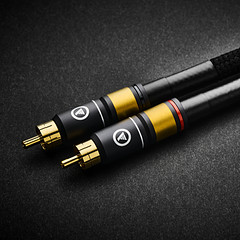
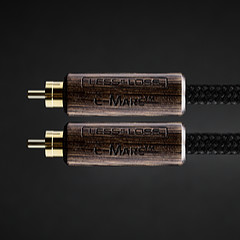
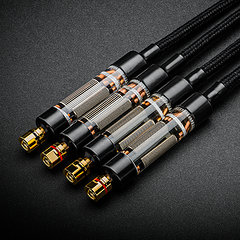
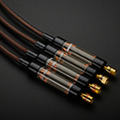
I am told these are hand built with in-house materials and you can without any doubt see the quality and workmanship that has gone into these cables. The Anchorwave interconnects sent to me are oval in cross-section, are no lightweights either and have a large curious rectangular tag of faux leather "butterfly wing" near each connector that looks strange at best and makes connecting them up no easy task with vertically aligned RCA sockets, because they obscure the bottom socket if the topmost one is connected first. My tip is to connect to the bottom RCA socket first and aligning these "wings" out of the way to make connecting up the top set easier. I tried to slide them up the cable but they seem firmly attached to the connector. They do though give the cables a clear identity so they are unlikely to be confused with any other brand of cable.
Whenever I have a new set of interconnects to evaluate, I do my level best to ignore them during any burn-in period and will have the system on as background music only while I am busy doing other things, so it came as a surprise to me that this cable somehow DEMANDED my immediate attention. It wasn't drawing attention to itself by having luscious bass, or crisp treble, or fireworks a-plenty with vivid dynamics, but it was none of those in isolation that drew me into the sublime sounds these cables were producing, most unlike any other cable heard to date. There wasn't soaringly high treble definition to grab you, there wasn't a bottomless bass to beguile you, there wasn't a seamless midrange to enchant either, and yet there I was being drawn inexorably into the music I was hearing because of it's sheer involvement and taken well beyond the proverbial toe tapping stage, into the murky realms of me singing along with the music too. Gosh and yeuk too.
Many a time in the past while auditioning cables I will have had the "Crikey, not heard that before" moments as isolated events, but this cable turned those moments into an endless joined up procession of musical joy, so CD after CD went into the player long into the nights and time simply stood still for me. Even the CDs I would normally dread playing took on a whole new musical character, one of those being George Michaels "Older" album which has some awful stings in the treble registers and no shortage of sibilance that can be painful enough to keep the volume turned down low. The Anchorwave managed to untangle this recording and lose the sting, yet still present the fine treble, reverb and ambience details this CD has tucked away, so it isn't just masking or attenuating the treble either. When it comes to the bass registers, this cable had to beat my own all time favourite bass communicator from Virtual Dynamics in the shape of their Genesis interconnects - now sadly no more. The Anchorwave easily outperformed the Genesis in every respect, because while the Genesis was always bass articulate, coherent and never shy of the lowermost octaves, it sacrificed the topmost registers and midband accuracy to achieve that, whereas the Anchorwave has no such traits and reproduced the entire audible band with accuracy, neutrality and sheer musicality.
To sum up then, these cables don't "do hi-fi" and to me that sets them well apart from the herd which will have degrees of that trait in their make-up. What they do do, is transmit the music in a way that not too many folks are familiar with and if you have owned high end cables like Nordost and Chord it will come as a shock that a cable can be so MUSICAL and you can listen for many hours and then some. In value for money terms they are not cheap but I would see that as an investment rather than anyone continue on a journey for a long time trying cable after cable to find one with equal musicality. Would I buy them myself? Of course I would ;-)
Associated equipment:
Eastsound E5 CD player, XTZ Desire A-1000D3 amp, Focal Chorus 706V SE, Randall Research silver interconnects, Tellurium TQ Black speaker cables, Belkin conditioner
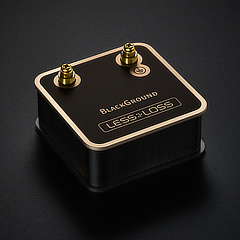
Blackbody
I purchased 4 units this summer after reading the great reviews. Initially I was skeptical that MY system could be improved by the field conditioner. I have been piecing together my system for over 20 years and tried all the tricks of the trade. I set these all near my components (my Zune, dac, pre-amp, power amp) and after putting on my favorite Chick Corea album I WAS BLOWN AWAY. I consider these a great bargain and worth it at twice the price. The sound-stage was improved dramatically, there was a certain lightness to the sound and the presence of the sounds I was hearing was unreal. The only issue I have with these is that I have to keep them away from my Orgone generators, also I noticed that my Himalayan salt power crystals weren't repelling as much bad energy, but that was easily fixed by moving them to another room.
Firewall
- Clearer, crisper
- Higher fine detail resolution
- Vocals more realistic
- Fuller sound
- Deeper bass
- Bass more articulate
- Starting to hear the recorded room now
- Instantly more realistic as a whole
- Lower noise floor: sounds like instruments used to sound through a veil.
- Smoother vocal
The improvements provided by the signatures were very significant and easily noticable. With just two Signatures in my system, I've achieved more improvement than had I spent more than double the amount of two Signatures on an amp upgrade, or, even a source upgrade (this, based on auditioning such products). By comparison I'd describe the Firewall's performance to be about 1.5x augmented beyond the improvements provided by two Signatures working together. The most general and wide-reaching improvement provided by the Signatures was realism. This is what I loved most. So, with the Firewall, for realism to be enhanced yet again and to this degree, this was truly special.
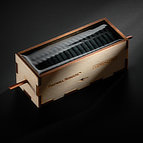
As for aesthetics, I love the look of the tankwood casing. It looks seamless, and the aluminum end pieces integrate very elegantly with the tankwood. When you get to handle one of these in person, after you get over how heavy it is, you immediately get the sense that this is something very hi-end, a refined piece of high performance equipment—something very special.
I've had the Firewall for nearly half a year now, and I'm every bit as satisfied as when I first heard it.
My system:
Speakers: Focal 816V
Speaker Cables: LessLoss Anchorwave (3m)
Amp: Yamaha RX-A 3010
Interconnects: Kimber PBJ
Source: Cambridge Audio 650C
Power cords: LessLoss DFPC Original; LessLoss DFPC Signature
Power conditioner: LessLoss Firewall
Power distributor: Furutech e-TP60
Anchorwave Speaker Cables
Speakers: Focal 816V
Speaker Cables: LessLoss Anchorwave (3m)
Amp: Yamaha RX-A 3010
Interconnects: Kimber PBJ
Source: Cambridge Audio 650C
Power cords: LessLoss DFPC Original; LessLoss DFPC Signature
Power conditioner: LessLoss Firewall
Power distributor: Furutech e-TP60
Before the Anchorwave I used the Kimber PBJ interconnects ($150 for a 1m pair). I've been quite pleased with their performance. I don't like incremental upgrades (who does?), and so where the PBJs have been known to play ball with much more costly interconnects, I knew this was going to be an expensive endeavour. The nice thing about LessLoss is that, since you're buying straight from the company, you know you're probably paying nearly 2-3 times less than had they made the product available by importing, distributing, and then finally selling it to you through a dealer. So, even though the Anchorwaves cost 5 times what the Kimber does, there's consolation in the fact that you're probably getting what would otherwise be a $2000-plus interconnect, but for under a grand. Of course, the question comes to mind, "well, does the Anchorwave offer 5x better performance than the PBJ?" No. Of course not. But for me, the differences don't have to be 5x greater for them to be significant.
There were many significant reasons I chose the Anchorwave interconnects over others. First, I already have the Anchorwave loudspeaker cables, and I've been exceptionally pleased with their performance. Second, (and maybe this is the same as the first), for system synergy. Since I was already having excellent results with the Anchorwave speaker cables, and since I couldn't afford what seemed like the Holy Grail of interconnects (the LessLoss Tunnelbridge), it only made sense to completely employ this cable technology from the source to my loudspeakers. Third, the cost. I know from experience (also inferring from press and user reviews) that the loudspeaker cables perform very well among much more expensive cables. So it seemed reasonable to expect the same from the matching interconnects. Lastly, I knew that if by some chance this interconnect was a disaster, I would have no trouble getting my money back. All my previous experience with LessLoss suggests that Louis Motek makes great efforts to make customers happy. I don't know how he does it: runs the business and still finds time to quickly offer generous replies.
When I first listened to the cable, the thing that immediately struck me was the drop in noise. I expected that from the LessLoss power cables, but I didn't expect it like this from the interconnect. I mean, yes, I heard this kind of thing with the Anchorwave loudspeaker cables; I think it caught me off guard because I was now hearing that enhancement at the next level so-to-speak. I've recently placed my speakers even farther from the back wall. While it gave me a much better soundstage, I lost a lot of low end (no matter from where I evaluated in the room). With the Anchorwave interconnects I was very pleased to hear some of this bass restored. I also experienced something totally unexpected. I was listening to a song where the instrument positioning just sounded lop-sided on stage (like the right speaker was imaging the musicians lower than than the left). I'd always just written this off as a quirk in the recording. But when I heard the song through my new interconnects, the sound stage was balanced. That was a shocker. The other things I noticed were subtle improvements, probably from the drop in noise: I noticed an all around enhanced clarity and detail. I can say that some things sounded identical to the Kimber, particularly with sounds when you pay attention to the pronunciation of words in male and female vocals. Nevertheless, I haven't yet found anything that sounds worse. In the end, I must say, there certainly were notable differences from switching to the Anchorwave interconnects. It makes me want to listen to all my favourite tracks all over again, just to hear what I've been missing.
One thing I love about the interconnects is the locking connectors. I really appreciate having control over how tightly the connectors mate with my gear. Nothing feels cheap about this cable. From end to end, everything looks and feels as if it was very well built. The cable is reasonably flexible, so I had no problems installing it. Despite its simple external appearance, it has a certain element of beauty. It's nice to trot behind the components and admire it from time to time, especially if you become familiar with the technology inside.
DFPC Series [Signature]
Had someone blindfolded me and made me listening to my stereo with the two new power cords and told that it was a new stereo, I would have reacted by saying that the sound was really better and that that stereo set was necessarily a more sophisticated that mine.
My stereo set equipped with 2 of your DFPC Signature power cords is now performing significantly better.
The DFPC Signature is a surprisingly good product which is sold at a very reasonable price.

LessLoss History From the Very Beginnings

LessLoss started its business on Audiogon in late 2007. Within the first couple of month, word about LessLoss spread like wildfire among Audiogon members. Here is the feedback received from our clients during our first year of operation. This is from even before we had our own website.
Louis is one of the best in the business, truly professional and very fast production and delivery. I am very satisfied by your superb service. Many thanks.
Positive by Buyer Sebastian (135) on 07-29-2008
Excellent transaction with Lessloss on dynamic filtering power cord. Good communications & fast shipping. A+++++
Positive by Buyer Sennett (45) on 07-03-08
Bought 3 pc's from Liudas in Jan/08. Outstanding product as advertised. Performance is everything and more than I expected. Kudos to Lessloss cable for a great product. Very highly recommended...A+++
Positive by Buyer Phillykid (33) on 06-19-08