






User Reviews
Published LessLoss Reviews Now Number Over 727
DFPC Original (legacy)DFPC Signature (legacy)DFPC Reference (legacy)DFPC Series (legacy) (all)Digital Cable (legacy)Firewall (legacy)Anchorwave (legacy)Homage to Time (legacy)Tunnelbridge (legacy)Laminar Streamer (legacy)Bindbreaker (legacy)
All
DFPC Series [Signature]
Thanks,
pg
DFPC Series [Signature]
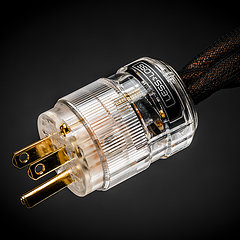
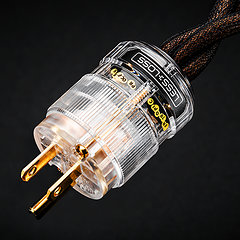
On my system until now, all the big upgrades I have done with cables have brought good improvements. So I wanted to first try 2 DFPC cables and then, eventually, 4 more cables. Louis Motek in fact recommended me to take more DFPC cables instead of the Firewall.
*I have to point out, Louis was a great help; he took a lot of time to answer my questions.*
My system has 2 amps: one for Home Cinema (the NAD M15 HD2 / M25) and for Stereo, the T+A V10-2.
All speakers are from Piega, the big Front speakers are the C40.
The first impression was, I got more bass. My subwoofers, I had to readjust, they got too much bass. Minus 3 dB. Now they are perfect.
After 2 weeks of burning in the cables, the music got more clear and to me it sounds more analog. When I watch a movie, the sound is more around, deeper, and with better details than before.
I am glad I bought these DFPC cables and I recommend them to improve your system.
DFPC Series [Original]
Thanks and I wish you all the best.
DFPC Series [Original]
I carried out initial tests with it, and indeed your cable is an astonishing one! It is a true performer, and it is exactly what I was looking for, for years!! It gave me better dynamics, better resolution, better control, a quieter background, an improved soundstage and imaging, naturalness (natural timbres) and correct tonality, musicality and equilibrium. This cable improved the sound in all the areas that I could think of. It was like an important component upgrade and I'm looking forward to replace all my other current power cables with your cables.
This is indeed a truly wonderful cable and your vision/philosophy of the sound coincide with my own from what I'm hearing. I was looking for something like this for some years, not being satisfied in my search, blaming sometimes the 'active' components (speakers, amps, players etc.) and/or sometimes cables, or the lack of synergy. But now, for the first time I'm in the right direction, and it is amazing to see how close to natural and close to the correct sound an electronic component can sound - but a decent one of course - with the proper and the right power cable (the LessLoss), and how the equilibrium between performance (translated in terms like resolution, dynamics, soundstage etc.) and musicality (so not mere 'signals' or just sounds) emerge in a natural way. For sure, there is still a lot of room for improvement in my system, but now I find that the electronics themselves are quite OK if they were made with a decent conceptual design, implementation and components and proper attention to details, in trying to replicate the true, natural sound and not a colored one. Thanks again and keep it up, making outstanding and valuable audio products!
This is my system at the moment:
- speakers - Sonus Faber Cremona M
- source (player) - Simaudio Moon CD3.3 with XLR
- preamp - Sugden Masterclass LA-4
- power amp - Pass Labs X150
- cables: Kimber Monocle X (speakers), Kimber Select 1111 and Neotech NEI3101 (interconnects),
- power cables - DFPC Original, PS Audio Statement SC, PS Audio Statement and Vincent Audio.
- passive filter - PS Audio Quintessence (used only for the player).
Blackbody
Briefly and to the point. Anyone who thinks his system has been optimized without adding the Blackbodies is missing the boat. They bring about an amazing and addictive improvement. Once sampled there's no going back.
DFPC Series [Original]
Thank you once again!
My system from the wall to the speakers:
LessLoss DFPC Original power cable - Furutech e-TP60 on Brightstar Isonodes - Airport Express - Chord TOSLINK - Musical Fideliy V-DAC II with V-PSU II on Brightstar Isonodes with a half kilo brass weight on each - Cardas Quadlink interconnect - Creek Evo 2 integrated on an SSC Evolution isolation platform and two kilos of brass weights on top - Chord Carnival speaker cables on Cardas Golden Cubiods (to be replaced with Cardas Quadlink) - Totem Rainmakers on custom designed RS300 stands.
Music is streamed from a MacBook Pro running iTunes and Pure Music.
LessLoss Digital Cable
Preamble -- We got "acquainted" with the LessLoss cable whilst evaluating DAC, Digital Cable and Digital Source components for our new dealership a few months ago.
The establishment of this dealership was a "second" expression of our passion for music reproduction and a desire to "keep the flame alive", current economic conditions notwithstanding. It follows on from the set-up a year ago of the US-based auditioning facility for a close friend who is a Swiss Ultra-High End manufacturer that markets battery-powered components and ribbon speakers.
Going back in Time -- I, as had many fellow music lovers, witnessed many of the good as well as the sad developments that Audio had experienced over the last 30 years. I had also done the "kitting" and "home-brewing" thing, and had walked the road much traveled by audiophiles in quest of the holy grail. This voyage also included a 12 year stint as a High End distributor in Europe, a business that I decided to exit in 1999 due to other priorities.
Back to the Present -- This was an exciting new start. We had to select our new lines from scratch, and had arranged for sample gear from which to make our final selection. Although we had a fairly good understanding of what it was we were going to evaluate , we had no preconceptions as what exactly to expect. We had had little first-hand exposure to many of the components, let alone how they would complement one another in a given system set-up.
The Evaluation Environment -- The components in the Digital Front End chain sourced the highly resolved $350K Swiss High-End system, one that very clearly transmits the various aural characteristics of any associated components. For the purpose of the first stage of the evaluation, the only AC powered gear in the chain were the CDTs and the DACs. In a second stage, AC powered amplification components replaced their Swiss battery-powered counterparts.
The large listening room - 18.5' W x 29' L x 10.5' H (6.0m x 8.8m x 3.2m) - was favorably dimensioned (minimal nodes) and was treated, albeit modestly. Evaluation time : 6 weeks + 5 days cable pre-cooking prior to start.
Caveat -- Before commenting on the LessLoss, we have to point out that all of the Digital Components in our evaluation - whether DACs, CDTs, or Digital SPDIF Cables - proved to be very musical, each contributing, in one combination or the other, to providing a superior rendition of the music material, albeit with each combination and permutation doing so in a somewhat emotionally differentiated manner. Much like a well known Aria from an Opera that is performed alternatively by Pavarotti, Domingo and Carreras.
Overriding Philosophy -- Our overall approach and philosophy as regards Audio is founded on the premise that people have differentiated musical preferences, and inevitably will "hear" and enjoy musical reproduction in their own "emotional" way. Many are conditioned by years of listening to a particular genre (or two) of music, which they have every right to "prefer", and which often puts different demands on a chain of audio components.
We are not "absolutists" and do not believe in absolute systems -- there can be no absolute, as the ears and emotional needs are different to begin with. Furthermore, a high component price is also not necessarily a guarantee of superiority over a lower priced equivalent. Budgets, and thus affordability are very real factors in system composition. We ultimately judge a system, whatever its price, by how "musical" and emotionally compelling it is to a particular sub-set of "ears", and in relation to the investment required to acquire it.
Digital Cable & Pricing -- As for price points of the 7 digital cables in question, these started as low as $150 per mtr for one cable in particular, and graduated all the way up to $ 2,000 per m. The LessLoss Digital Cable, for reference, retails at $ 695 per m, including free worldwide delivery.
Other Digital Components - The 7-DAC line up varied as well, with the lowest price DAC retailing at $450 and the highest at $4,500. DAC types included 3 NOS, 1 Parallel and 3 Delta Sigmas. 3 different CDTs were part of the evaluation, and ranged in price from $2,500 to $4,500 (2 Sanyo belt-drive types, and one incorporating the Philips CDpro2LF mechanism).
The LessLoss Digital -- When we first received it from Louis, we were certainly expecting the LessLoss to be a "good" cable - one that did "many things well". So how would it fare in comparison?
Up front, it became very evident that from the 7 cables in test, 3 groupings emerged with each group exhibiting a particular sonic sub-set of characteristics. The first 2 groups comprised 3 cables each, with the last group represented by the LessLoss "in solo". The cables in the first 2 groups performed more or less optimally depending on associated DACs and CDTs. Ultimately, we were able to "match / mate" all of these 6 cables to DAC/CDT combinations that resulted in very good results.
On its own in Group 3, the LessLoss distinguished itself from all others. At first it was difficult to describe in the usual terms why we were consistently "setting it apart". After about 1 week of listening, we simply concluded that it was a beast of a different species, and decided to come to grips with what was happening here.
It seemed to have its own "sound", character, presentation -- very individualistic and immediately recognizable once introduced into the chain -- regardless of what DAC/CDT combination it served to connect.
In a way, the LL consistently dominated the "theme". This was not the case with the other cables where DAC substitutions noticeably took "front stage".
Initially, this was somewhat disturbing, as this phenomenon was not something we had encountered before. The LL listening experience did not cause us to immediately "describe" one attribute or another. It was as though we were suspended in sonic limbo struggling to find our bearings. Intellectually discomforted, we even questioned whether this was a good thing or a bad one. This cable seemed to announce itself very forcefully, and there was this notion out there that a "cable should get out of the way". This consistent behavior also begged the following question: Was the LL imparting a character to the sound or was it in fact "getting out of the way" ?
Whatever the elusive answer to this question, the one thing we instinctively were very sure of was that we liked it a whole lot. So much so, that we found ourselves exclaiming in unison immediately after it was connected into the chain: "Here comes the LessLoss !".
Incidentally, this cable's characteristics are shared by the LessLoss Anchorwave Interconnects and their DFPC Signature Power Cords -- a common "theme" of sorts.
We could talk about improved clarity, sound-staging, frequency extension and so on - but all of this seemed redundant. This cable was "holistic", and thus about something else :
A.
- Order
- Discipline
- Control
- Presence
B.
- Cohesion
- Balance
- Largesse
- Space
- Profundity
C.
- Clairvoyance
- Nuance
- Distilled
- Prescient and Discerning
To be perfectly clear >> What it is NOT is : charming, romantic , dramatic and flamboyant, sweet, laid back, silky-smooth, punchy, visceral, and so on. So, a word of caution to those that have a "rightful" preference -- or need -- for one or the other (or combination thereof) of the aforementioned sonic character traits. The LL will "expose". It does not "tweak". However, the sum total of its attributes is very "alluring" indeed.
The LL cable takes some time to mature and exhibit its full potential. We had pre-treated it (and all other cables) on an AudioDharma Cooker for about 7 days before test. At first it was characterized by the descriptors in list A above. Over the ensuing weeks it progressed to include first those in B, and finally those in list C. This is a cable that needs time and patience.
In Summary, this is a very exceptional cable, one that will complement and transform (almost) all digitally-fronted systems.
Once the LL is "fully on board", just sit back and enjoy the music -- and forget it is even there -- well, well ... I think we just said that it "got out of the way" !?!
Is it the best ? Does it matter ? Of all the very many cables available, it certainly is one of the best. Is it expensive at $ 695 ? Given its "transformational" abilities, we think not !
Enjoy
Constantin
PS -- We hope you will appreciate that as a dealership representing multiple lines -- and given our philosophy -- we have chosen to remain anonymous and to refrain from citing the brand names of the other cables and components participating in our tests.
DFPC Series [Signature]
Had someone blindfolded me and made me listening to my stereo with the two new power cords and told that it was a new stereo, I would have reacted by saying that the sound was really better and that that stereo set was necessarily a more sophisticated that mine.
My stereo set equipped with 2 of your DFPC Signature power cords is now performing significantly better.
The DFPC Signature is a surprisingly good product which is sold at a very reasonable price.

Anchorwave Speaker Cables
Speakers: Focal 816V
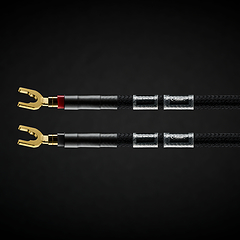
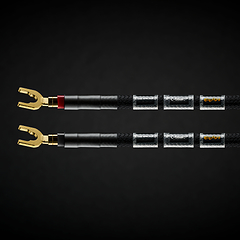
Speaker Cables: LessLoss Anchorwave (3m)
Amp: Yamaha RX-A 3010
Interconnects: Kimber PBJ
Source: Cambridge Audio 650C
Power cords: LessLoss DFPC Original; LessLoss DFPC Signature
Power conditioner: LessLoss Firewall
Power distributor: Furutech e-TP60
Before the Anchorwave I used the Kimber PBJ interconnects ($150 for a 1m pair). I've been quite pleased with their performance. I don't like incremental upgrades (who does?), and so where the PBJs have been known to play ball with much more costly interconnects, I knew this was going to be an expensive endeavour. The nice thing about LessLoss is that, since you're buying straight from the company, you know you're probably paying nearly 2-3 times less than had they made the product available by importing, distributing, and then finally selling it to you through a dealer. So, even though the Anchorwaves cost 5 times what the Kimber does, there's consolation in the fact that you're probably getting what would otherwise be a $2000-plus interconnect, but for under a grand. Of course, the question comes to mind, "well, does the Anchorwave offer 5x better performance than the PBJ?" No. Of course not. But for me, the differences don't have to be 5x greater for them to be significant.
There were many significant reasons I chose the Anchorwave interconnects over others. First, I already have the Anchorwave loudspeaker cables, and I've been exceptionally pleased with their performance. Second, (and maybe this is the same as the first), for system synergy. Since I was already having excellent results with the Anchorwave speaker cables, and since I couldn't afford what seemed like the Holy Grail of interconnects (the LessLoss Tunnelbridge), it only made sense to completely employ this cable technology from the source to my loudspeakers. Third, the cost. I know from experience (also inferring from press and user reviews) that the loudspeaker cables perform very well among much more expensive cables. So it seemed reasonable to expect the same from the matching interconnects. Lastly, I knew that if by some chance this interconnect was a disaster, I would have no trouble getting my money back. All my previous experience with LessLoss suggests that Louis Motek makes great efforts to make customers happy. I don't know how he does it: runs the business and still finds time to quickly offer generous replies.
When I first listened to the cable, the thing that immediately struck me was the drop in noise. I expected that from the LessLoss power cables, but I didn't expect it like this from the interconnect. I mean, yes, I heard this kind of thing with the Anchorwave loudspeaker cables; I think it caught me off guard because I was now hearing that enhancement at the next level so-to-speak. I've recently placed my speakers even farther from the back wall. While it gave me a much better soundstage, I lost a lot of low end (no matter from where I evaluated in the room). With the Anchorwave interconnects I was very pleased to hear some of this bass restored. I also experienced something totally unexpected. I was listening to a song where the instrument positioning just sounded lop-sided on stage (like the right speaker was imaging the musicians lower than than the left). I'd always just written this off as a quirk in the recording. But when I heard the song through my new interconnects, the sound stage was balanced. That was a shocker. The other things I noticed were subtle improvements, probably from the drop in noise: I noticed an all around enhanced clarity and detail. I can say that some things sounded identical to the Kimber, particularly with sounds when you pay attention to the pronunciation of words in male and female vocals. Nevertheless, I haven't yet found anything that sounds worse. In the end, I must say, there certainly were notable differences from switching to the Anchorwave interconnects. It makes me want to listen to all my favourite tracks all over again, just to hear what I've been missing.
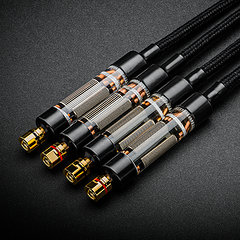
One thing I love about the interconnects is the locking connectors. I really appreciate having control over how tightly the connectors mate with my gear. Nothing feels cheap about this cable. From end to end, everything looks and feels as if it was very well built. The cable is reasonably flexible, so I had no problems installing it. Despite its simple external appearance, it has a certain element of beauty. It's nice to trot behind the components and admire it from time to time, especially if you become familiar with the technology inside.
Firewall
- Clearer, crisper
- Higher fine detail resolution
- Vocals more realistic
- Fuller sound
- Deeper bass
- Bass more articulate
- Starting to hear the recorded room now
- Instantly more realistic as a whole
- Lower noise floor: sounds like instruments used to sound through a veil.
- Smoother vocal
The improvements provided by the signatures were very significant and easily noticable. With just two Signatures in my system, I've achieved more improvement than had I spent more than double the amount of two Signatures on an amp upgrade, or, even a source upgrade (this, based on auditioning such products). By comparison I'd describe the Firewall's performance to be about 1.5x augmented beyond the improvements provided by two Signatures working together. The most general and wide-reaching improvement provided by the Signatures was realism. This is what I loved most. So, with the Firewall, for realism to be enhanced yet again and to this degree, this was truly special.
As for aesthetics, I love the look of the tankwood casing. It looks seamless, and the aluminum end pieces integrate very elegantly with the tankwood. When you get to handle one of these in person, after you get over how heavy it is, you immediately get the sense that this is something very hi-end, a refined piece of high performance equipment—something very special.
I've had the Firewall for nearly half a year now, and I'm every bit as satisfied as when I first heard it.
My system:
Speakers: Focal 816V
Speaker Cables: LessLoss Anchorwave (3m)
Amp: Yamaha RX-A 3010
Interconnects: Kimber PBJ
Source: Cambridge Audio 650C
Power cords: LessLoss DFPC Original; LessLoss DFPC Signature
Power conditioner: LessLoss Firewall
Power distributor: Furutech e-TP60
LessLoss History From the Very Beginnings

LessLoss started its business on Audiogon in late 2007. Within the first couple of month, word about LessLoss spread like wildfire among Audiogon members. Here is the feedback received from our clients during our first year of operation. This is from even before we had our own website.
Louis is one of the best in the business, truly professional and very fast production and delivery. I am very satisfied by your superb service. Many thanks.
Positive by Buyer Sebastian (135) on 07-29-2008
Excellent transaction with Lessloss on dynamic filtering power cord. Good communications & fast shipping. A+++++
Positive by Buyer Sennett (45) on 07-03-08
Bought 3 pc's from Liudas in Jan/08. Outstanding product as advertised. Performance is everything and more than I expected. Kudos to Lessloss cable for a great product. Very highly recommended...A+++
Positive by Buyer Phillykid (33) on 06-19-08